


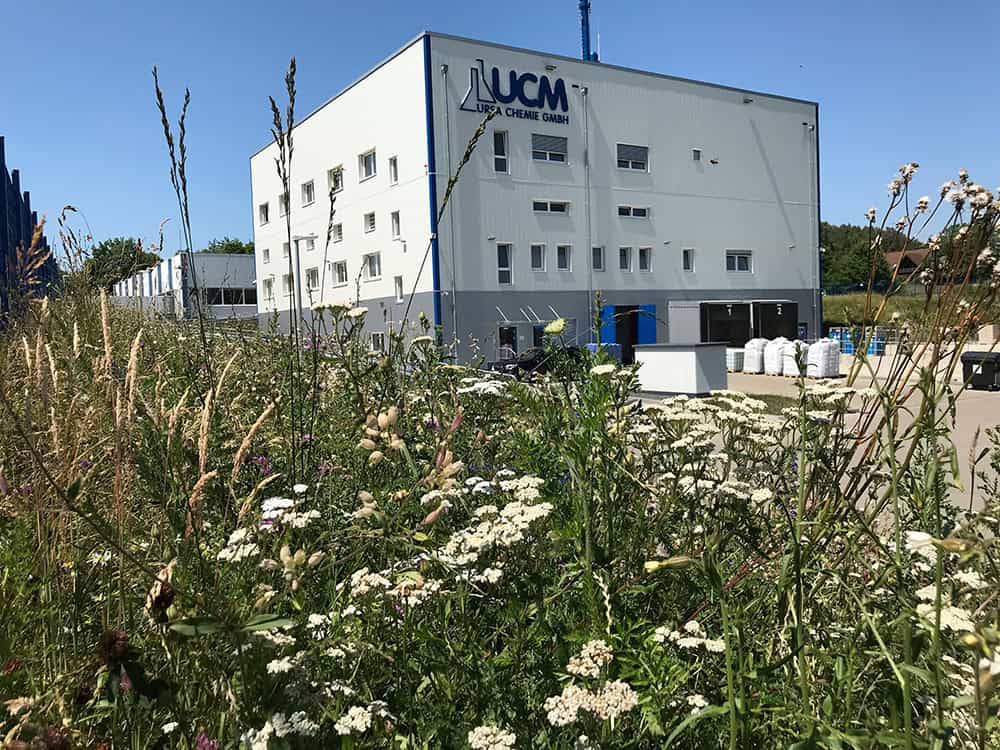
The lawn has just been mowed, the edges are neatly trimmed – for many people, this is simply part of what makes a perfect garden. Yet it is precisely this image that is deliberately challenged in May. Because during ‘Mow-Free May’, the motto is: switch off the lawnmower, switch on nature.
We at Ursa-Chemie are also making it very clear: we’re on board!
What is behind “Mowing-Free May”?
The initiative was launched by the German Horticultural Society (Deutsche Gartenbau-Gesellschaft 1822 e.V.) in collaboration with the Rhineland-Palatinate Horticultural Academy and the Baden-Württemberg Horticultural Academy – and this marks the sixth time it has been held.
The aim:
To transform millions of square metres of lawn into flowering habitats – simply by not mowing in May.
What may at first sound like a matter of convenience is, in fact, an effective contribution to nature conservation.
Why May, of all months?
May is a crucial month for many insects:
• Wild bees tend to their brood
• Bumblebee queens establish new colonies
• Butterflies lay their eggs
All these animals depend on flowers – and that is precisely what is missing from closely mown lawns.
If you let the grass grow, something amazing happens:
Within a few weeks, natural flower beds spring up, filled with dandelions, daisies, clover and more.
👉 Studies even show that:
Unmown areas are home to up to five times as many insect species.
More than just insect protection
A longer lawn has other benefits too:
• Improved microclimate: the soil stays moister and cooler
• Stronger roots: the lawn becomes more resilient to drought
• Greater biodiversity: herbs and wildflowers return
Or to put it another way:
A “green space” becomes a thriving ecosystem.
“Messy”? Or simply thinking sustainably?
In many neighbourhoods, there is still pressure to have a perfectly manicured lawn. But this is precisely where ‘Mowing-Free May’ is sparking a change in mindset:
👉 Mowing less often isn’t a sign of laziness – it’s a sign of environmental awareness.
Instead of a “manicured lawn”, the motto is: dare to be a bit wilder.
Does that really work?
A look at the UK shows that the answer is yes!
Through its ‘No Mow May’ campaign, the organisation Plantlife was able to demonstrate that: 👉 nectar production on lawns increases tenfold
This means significantly more food for:
• bees
• bumblebees
• hoverflies
• butterflies
And best of all: no need to sow new seeds.
It’s that easy to get involved
It’s really easy to get started:
1. Leave the lawnmower in the shed
2. Observe nature
3. Count flowers and insects
4. Share your results (optionally using #MähfreierMai)
There is also a hands-on activity:
“Every flower counts!”
Here, participants can:
• count flowers and insects within a one-square-metre area
• submit a photo
• take part in a nationwide competition
Prizes include seeds, gardening books and vouchers.
Our contribution at Ursa-Chemie
We don’t just talk about it – we get involved.
In doing so, we are making a conscious effort to promote greater sustainability and biodiversity – right on our doorstep. Because every flower counts.